Dear Board, don’t engage me to undertake your outsource compliance requirements until you have read this!

Compliance monkeyGuernsey has an amazing regulatory framework which has become quite a selling point with financial service businesses offering their products and services and those financial service businesses wanting to come and have operations here. Some will utilise outsource compliance professionals to assist them with the cost of set up, on-going costs,  ensuring their business can have knowledgeable and professional persons on-board while it establishes and grows its presence and offerings. Even established firms may need extra compliance support in their business to be able to ensure that they can at all times remain compliant with the Guernsey regulatory framework or ensure that remediation is appropriate and effective.

In the last year the use of outsource compliance professionals has come to the forefront of the regulatory radar, instances of their failure having been identified as contributing to businesses failing to adhere to the regulatory framework. There have been numerous communications from the Commission to the industry on the issues surrounding the requirements for utilising an outsourced compliance professional and failures where this has not been met, showing that the Commission are treating this seriously.

At the end of the day the responsibility for compliance to the regulatory framework is laid firmly at the feet of the Board and they are the first point of call when failings or regulatory deficiencies are identified by the Commission. The need to ensure a Licensee is meeting the regulatory requirements forms at the most basic level with the minimum criteria of licensing as well as being mentioned throughout the regulations, codes instructions, and guidance issued by the Commission.

So what needs to be considered by Boards? Here are some questions to be asked but at all times refer to the legislation regulations, rules,instruction and codes that pertain to your business and licence.

Prior to any engagement consider these points.

You wouldn’t employ anyone to undertake the role in a full-time capacity so why would you chose anyone to do your outsource function?

Prior to any engagement do your due diligence on the outsource company/ person, the person who will be your appointed compliance representative and the people who will be doing the work. At the very minimum the person who will be undertaking the work needs to be suitably qualified and knowledgeable of the area your business operates in and the regulatory rules that pertain to your licence.  You will need to ensure that you can evidence that they have been appropriately screened as you will be expected to have been as diligent with your provider as with your own staff!

You wouldn’t employ anyone who doesn’t have the time for your business?

Prior to any engagement you need to work out how much time will be required. This will change from the role that compliance professional will undertake, as an example an outsourced MLRO will have different time requirements to a compliance professional assisting with licensing.

When you actually look at it, if you have a compliance professional for two hours a week it would take them eighteen weeks to achieve one thirty-six hour working week in your business! Obviously cost is a major factor in this assessment and knowledge and experience never come cheap. The time any compliance professional spends on your business must be commensurate to the size, complexity and nature of your business and the role undertaken.

You need to be aware that a compliance professional will also be working for other firms, there is obviously a risk regarding resources. If their clients require more time or the outsource provider or person undertaking the role has issues with resources will you be affected? You need to ensure that there are controls in place or a plan B to mitigate these risk.

You wouldn’t have any old agreement?

You need to ensure that the outsource agreement meets the requirement of the Guernsey regulatory framework and is legally binding. The Board cannot discharge its responsibilities only delegate the work, it is often a good idea to have a Guernsey Advocate firm look over any agreement, especially if the Board are not familiar with Guernsey Law or this area.

During any engagement consider these points.

You wouldn’t want to be assessed by any old criteria, what criteria is the business or business area being assessed to?

Again this depends on the role you are utilising the outsourced compliance professional for, but you need to know how they are monitoring you and to what standard.  The Board must make sure that it can evidence and satisfy itself and the Commission that the Guernsey regulatory framework requirements have been met.

You wouldn’t want any report, do the reports provided give the full picture of the work being undertaken?

The reports that are provided to the Board must be meaningful and contain accurate management information. This allow the Board to see the whole picture of their business or the area that the outsourced provided has been contracted to service and assess the level of compliance to the regulatory framework. If areas or remediation work have been identified are the Board kept appropriately up to date?

You wouldn’t want to keep on anyone who isn’t performing, is the outsource provider performing to the required standards?

Throughout any engagement the Board must consistently monitor and evidence its monitoring of the outsource provider and/or those undertaking the work for the Licensee. Is the Board satisfied with the work undertaken, is the monitoring of the business meeting the requirements of the Guernsey regulatory framework, has the business changed in its complexity, nature or size and is the person doing the role still suitable?

The most important aspect to any outsource relationship is that you have the right person/firm, they add something to your business, provide you with the accurate management information, they get on with you and are honest to you regarding their business and yours. By hopefully considering and evidencing these requirements a Board will be able to show that they have acted to ensure that their business meets the requirements of the Guernsey regulatory framework. In the unfortunate case where things have not worked out the Board will be able to evidence that they were aware of the issues at the earliest opportunity and have acted to mitigate any non-compliance and remediate the situation.

The Sum of All the Parts

Compliance monkeyThe Guernsey Anti-Money Laundering and Countering Terrorist Financing (“AML/CTF”) framework has continually developed to take in to account good practice, external pressures, requests and recommendations of onshore governments, quangos and international organisations  to ensure that financial crime in all its guises is effectively tackled. The Commission have sought to and I would say that they have largely achieved a cohesive framework that effectively mitigates against the use by criminals of Guernsey as an international finance centre while not over burdening the Financial Service Business operating here.

This cohesive framework has been achieved over the course of the years by open dialogue with local industry bodies, licensees and working effectively and productively with those outside of Guernsey to achieve a proportionate approach for  the products and services that are provided to clients wishing to utilise the jurisdiction. Most notably in 2013 the AML/CTF framework in Guernsey changed extensively and this resulted in general insurance products being removed, but did it remove all the products and services that can classified as General Insurance?

With regard to the Insurance sector in Guernsey, a legal entity can be licensed for general business or for long-term business. Long term business is defined in the Insurance Business (Bailiwick of Guernsey) Law, 2002 as contracts on human life, human longevity, marriage and birth, linked long-term, permanent health, capital redemption, pension fund management and credit life assurance. Due to the nature and the requirements of some clients, an insurance licensee with a general business categorisation may want to offer some of these products to their clients to supplement the range of products and services they currently or can offer their clients, but without the need to be licensed for long-term business.  Section 2(4) of the Insurance Business (Bailiwick of Guernsey) Law, 2002 does allow for an Insurance licensee to elect that a contract for a term of not more than 18 months that may be regarded as a long-term business contract and can be deemed to be general business.

This would appear to allow a general insurer to fit such products into their licence requirements e.g. general insurance, without the requirements to adhere to the Guernsey AML/CTF framework as per the changes that were made to the Commission’s AML/CTF Handbook (” Commission’s Handbook”), in 2013.  It should be noted that the treatment of these products, though allowed to be done in certain circumstances by an Insurance licensee does not change the definition of those products in the Insurance Business (Bailiwick of Guernsey) Law, 2002.

In the Criminal Justice (Proceeds of Crime) (Bailiwick of Guernsey) Regulations, 2007 at schedule 1 it states that a Financial Services Businesses for the purposes of the Regulations are detailed in part 1 of the schedule, except where they are incidental or are other activities as listed at Part 2 of the Schedule. Part 1 of the schedule includes the carrying on of “Long Term Business as defined by the Insurance Business (Bailiwick of Guernsey) Law, 2002 as being a Financial Services Business for the purposes of the Regulation and the Commission’s Handbook, it does not include any change in the treatment of an Insurance product by an Insurance Licensee. The Commission’s Handbook at section 4.8 specifically deals with the treatment of life or other investment linked insurance policies and as such these appear to directly fall in to the Guernsey AML/CTF regime. Effectively this is saying that if a product falls under the long-term definition stated in the Insurance Business (Bailiwick of Guernsey) Law, 2002 though a Licensee it may regard it as being General business they remain subject to the AML/CTF Regulations. Thus a licensee must adhere to the requirements of the Commission’s Handbook and AML/CTF framework when dealing with such products.

The sum of all these parts would indicate that an Insurance licensee effecting or carrying out life or other long-term products regardless of how a Licensee may be able to classify these products as general business under the Insurance Business (Bailiwick of Guernsey) Law, 2002, they would still fall under the AML/CTF regulations and Commission’s Handbook by way of the requirements of the Criminal Justice (Proceeds of Crime) (Bailiwick of Guernsey) Regulations, 2007 held at schedule 1. An Insurance Licensee regardless of how it treats such products under its licence would be required to have in place an effective AML/CTF framework.  A licensee must be able to evidence the suitability of its AML/CTF framework and compliance with the AML/CTF requirements pertaining to its business to the Commission.

An Insurance licensee must ensure that at all times they meet the requirements for the minimum criteria for licensing, schedule 4 of the Insurance Business (Bailiwick of Guernsey) Law, 2002. This includes a requirement to meet and adhere to any rules, codes, guidance, principles and instructions issued from time to time under any other enactment as may be applicable to the business, and this would also be inclusive of the Guernsey AML/CTF framework.

Questions, Coffee and Ghosts.

imagesAre we now being regulated by international organisations and their regulators rather that our own regulators?  Is our regulatory framework becoming a secondary consideration to the regulatory frameworks and group policies of international organisations that finance our community?  Is this leading to the stagnation of Guernsey as a whole where compliance cost rise to meet these external influences rather than our own bespoke regulatory framework? Is our competing and partaking in business in the international or developing world inhibited? Are the policies of the international regulatory community focused on large organisations, with a one size fits all attitude to the detriment of our smaller bespoke financial service providers? Even looking outside of our Financial Service Industry have international organisations, regulators and governments lost contact with local industry and people making them unproductive, uncompetitive and restricted?

Our businesses whether in finance or outside must adhere in some degree, to the requirements of committees and boardrooms far flung from our Island, and the whims of persons who lack connection understanding or appreciation of our island economy and value. Are these institutions aware of our idiosyncrasies as they strive to achieve a mythical norm presented by scoring sheets, algorithms and public opinion of their home countries? Has the international community lost the ability or the want to differentiate between the size nature and complexity of their own and other communities, businesses and financial centres?

A thought struck me while handing over my Guernsey one pound notes for my coffee today, if we print money why can’t we loan money? Why can’t we create a bank of the Bailiwick or other funding enterprises, regulated to our own standards that are acceptable international standards and set up for the needs, development and innovation of our local businesses?  Could we run a bank for the good and development of our community and its financial and non-financial businesses, lessening compliance expense faced by our businesses by focusing achieving the requirements of our regulations? Are we not best placed to understand, develop, innovate and realise the hopes and dreams of our Island community? Could we provide this as yet another string to our bow allowing us to partake and compete effectively in the international community? Rather than fit in to a box could we provide the bespoke solution tailored to our needs and requirements?

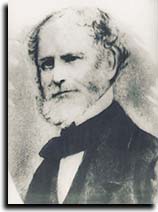
WilliamLeLacheurLooking into the last of my coffee as the rain began my mind was taken back to the ocean that I love so much, and yes we are but a drop in the ocean. The ocean has allowed us to raise some of the earliest taxes known, an anchor tax no less for the benefit of our Island and the development of our harbour in the 1400’s.  The ocean was mastered by our forefathers, and none other than William Le Lacheur who imported coffee and went on to influence economic and spiritual development in South America, as I walked through the Arcade I recalled how it was financed by Guernsey ingenuity and innovation.  I headed home past the Thomas De La Rue Public House, named after a Guernsey man who went from humble beginnings to founding De La Rue, who having adapted over the centuries and who have continually innovated while still printing bank notes today. These are but a few of the great historical figures that this Island has had and I could not help but wonder what these ghosts would suggest the same today, what would they think of my thoughts, would they see the potential of such ideas or a necessary to bring the development and innovation required to make the reality of tomorrow?

The ocean is vast and bountiful with a diversity of species and opportunities leading to competition and equilibrium, the loss of the equilibrium leads to the destruction of these unique habitats and species. Could the ripples of this idea radiate out to the benefit of our Island both domestically and internationally or will we be bound by the strangling nets of direct and/or indirect extra-territorial international regulation and policy? We need to look and focus on tomorrow while reflecting on the lessons of yesterday to achieve the dynamic solutions and adapt to the changing world as our forefathers did.